
IEC / SIRIM
What is a Battery Energy Storage System (BESS)
Energy Storage as Strategic Infrastructure
A Battery Energy Storage System (BESS) is more than a battery cabinet. It is a controlled energy asset that must integrate with the electrical network, load profile, protection scheme, metering, power conversion system, control strategy, fire safety concept and operational objective.
Tokai approaches BESS as an engineered system. We align the storage configuration with the facility’s power demand, resilience target, renewable energy strategy, peak management objective and compliance requirements.
The result is an energy platform that can support continuity, flexibility and long-term infrastructure optimisation.
Energy Storage as Strategic Infrastructure
Why Solar Alone Is No Longer Enough
Malaysia’s evolving electricity tariff structure and grid reliability demands mean that solar generation without storage leaves significant value on the table — and mission-critical operations exposed.
- Rising Time-of-Use (TOU) electricity tariffs from TNB
- Maximum Demand (MD) charges spike during afternoon peaks
- Solar PV only generates during daylight — no coverage for evening demand ramp
- Grid instability and voltage fluctuations risk production downtime
- Diesel backup generators are costly, polluting, and slow to respond
- ESG reporting now demands measurable carbon reduction evidence
- Data centre uptime SLAs leave no tolerance for sub-second gaps
- Store excess midday solar, discharge during peak tariff periods
- Flatten MD demand curves — directly reduce TNB capacity charges
- Sub-20ms switchover protects sensitive loads without interruption
- Reduce or eliminate diesel generator dependency
- Quantifiable carbon reduction for ESG reporting and Malaysia Net Zero 2050
- Intelligent EMS optimises charge/discharge cycles automatically
- Scalable from single-site to campus-level energy management
System Architecture
How an Integrated BESS System Works
A complete Tokai BESS installation links five core components into a single, intelligently managed energy ecosystem.
Solar PV
Rooftop or ground-mount solar generates DC power during daylight hours
BESS Unit
LFP battery bank stores excess energy and discharges on demand
EMS
Smart Energy Management System optimises charge/discharge in real time
Facility
Factory, data centre or commercial building receives stable, clean power
Grid
TNB grid interaction optimised — import during off-peak, export or isolate during peak
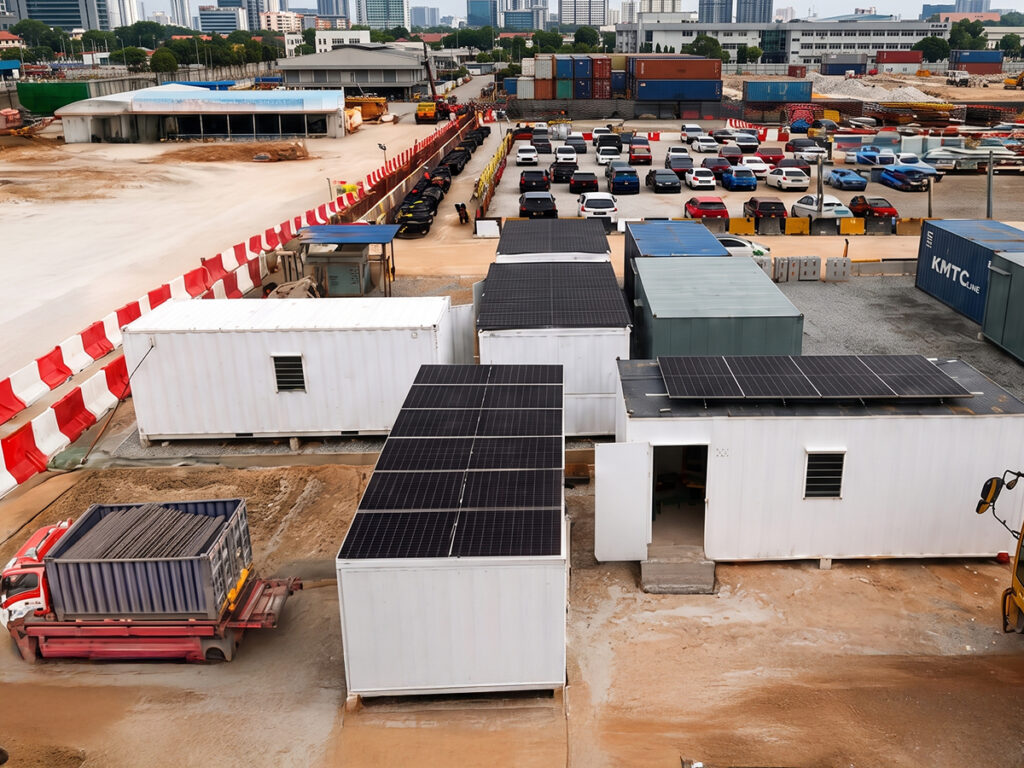
Temporary site cabin system
A reliable clean power package designed for temporary site cabins, site offices, guard houses, lighting, CCTV, WiFi, tools-charging and essential low load construction support.
CRASH-CRESS™ — Critical Reliable Advanced Storage Hybrid, Containerised Rapid Energy Support System — is Tokai’s proprietary high-performance BESS engineered for mission-critical environments. Built on LFP (Lithium Iron Phosphate) chemistry with an advanced Energy Management System, it is purpose-designed for Malaysian data centres, industrial facilities, and renewable energy projects.
system size sample (site cabin typical load 5 - 7kWH/day)
10 kWh - 16 kWh (16 - 24 pcs)
8kWh Hybrid Inverter
10.24 kWh - 20.48 kWh (2 - 4 units)
Optional Generator
Core System Considerations
Core Markets
Mission-Critical Resilience for Data Centres in Malaysia
Malaysia’s hyperscale data centre boom demands power infrastructure that matches Tier III and Tier IV uptime commitments. A Tokai BESS system delivers sub-20ms response for seamless UPS augmentation, enabling operators to reduce dependency on diesel generators while meeting both TNB power quality requirements and global sustainability targets.
- Sub-20ms switchover: no interruption to IT loads
- Black start capability for full site recovery after grid outage
- Peak shaving reduces capacity charges and lowers PUE
- Supports ESG and Net Zero reporting for hyperscale tenants
- Scalable from edge data centres to 100MW+ hyperscale campuses
MD Charge Reduction and Energy Resilience for Factories
Malaysian manufacturers operating under TNB’s Medium Voltage (MV) tariffs face punishing Maximum Demand charges that can represent 30–40% of total electricity bills. Tokai’s BESS solution shaves these peaks automatically, while providing voltage stabilisation that protects sensitive manufacturing equipment and production continuity against grid fluctuations.
- Automated peak shaving to reduce MD charges month-on-month
- Voltage stabilisation protects CNC, robotics, and process equipment
- Business continuity: factory keeps running during grid supply interruptions
- Integrates with existing rooftop solar PV assets
- Proven ROI through energy arbitrage and capacity cost savings
Cost Savings and Sustainability for Commercial Properties
Office towers, retail malls, and logistics hubs across Malaysia face similar demand-charge pressures as industrial users. A Tokai BESS installation reduces peak electricity costs, supports green building certifications (GBI, LEED, IGBC), and provides backup power that keeps lifts, cooling, and security systems running during supply disruptions.
- Reduces peak electricity bills for NLA-intensive commercial properties
- Supports GBI and LEED certification requirements
- Seamless backup for building-critical systems: cooling, lifts, access control
- Tenant attraction and retention through demonstrated ESG credentials
Maximise Your Solar Investment with Storage
Solar PV without storage exports excess energy at low feed-in tariff rates while forcing you to buy expensive evening peak power from the grid. Pairing solar with a Tokai BESS captures every kilowatt-hour generated at noon and deploys it precisely when your tariff is highest — transforming a good solar investment into an outstanding one.
- Store excess midday solar; deploy during high-tariff evening peak
- Eliminate curtailment losses under net energy metering (NEM) limits
- EMS optimises solar self-consumption to 80–95%
- Fully integrated with Tokai’s Solar EPC service — single-vendor accountability
- SEDA and ST compliant grid interconnection
Sectors Served
Typical Applications
Why Choose Tokai BESS?
Tokai understands that the future of infrastructure is not just protected – it is intelligent, flexible and resilient. Our engineering experience across data centres, substations, renewable projects, lightning protection, earthing and surge protection allows us to approach BESS from a whole-system perspective.
We help clients move from energy ambition to bankable, buildable and maintainable energy storage solutions.
Engineered battery energy storage solutions for commercial, industrial and critical infrastructure applications
Supports peak shaving, load shifting, backup support and renewable energy integration
Can complement solar PV, generators, UPS systems and smart energy management strategies
Designed around safety, system integration, lifecycle performance and operational objectives
Suitable for new-build projects, existing facilities and energy transition upgrades
Supports resilience planning for sites with high power demand or grid constraints
Integration with protection, earthing, surge protection and monitoring systems
Engineering-led approach from feasibility to implementation support
FAQ
Common Questions About Battery Energy Storage Systems
Understanding Battery Energy Storage System (BESS), standards compliance, and Tokai’s services.
What is a Battery Energy Storage System (BESS) and how does it work?
Is BESS cost-effective for Malaysian industrial and commercial users?
What does BESS cost in Malaysia, and how long is payback?
Does Tokai supply BESS for data centres in Malaysia?
What certifications does Tokai's BESS carry?
Can BESS integrate with my existing solar PV system?
Complete Protection
Related Services
Lightning protection is one layer of a complete protection strategy. These services work together under the IEC 62305 framework.
Ready to Reduce Energy Costs and Strengthen Resilience?
Tokai BESS is designed for the next era of power infrastructure – where resilience, sustainability and intelligence converge. It gives facilities the ability to store energy, strengthen continuity and participate in a more adaptive energy future.